Boost Product Appeal Using Manufacturing Video Solutions
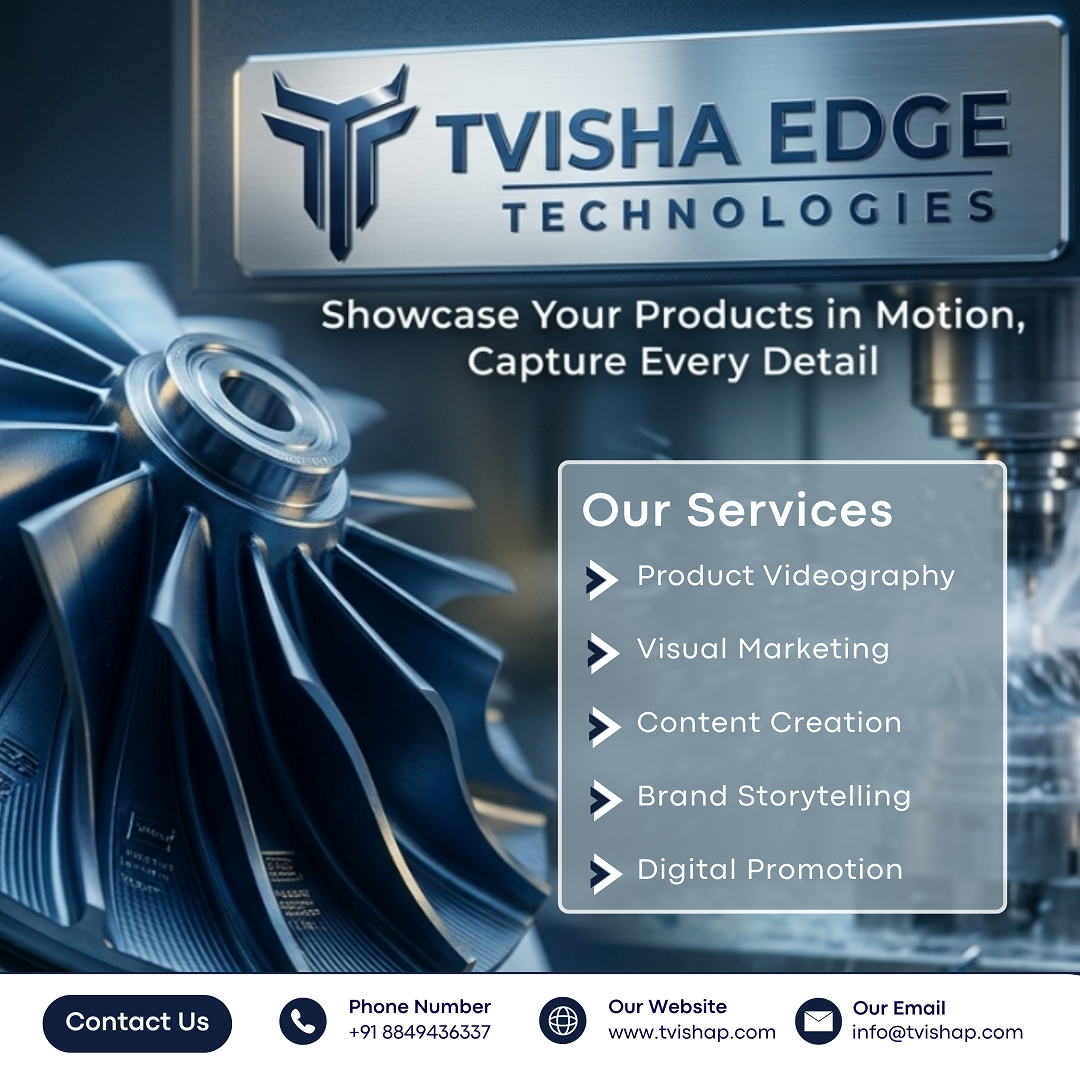
Elevate Product Impact with Manufacturing Video Solutions by Tvisha Edge Technologies
In modern manufacturing environments, product appeal goes far beyond static catalog images. Boost Product Appeal Using Manufacturing Video Solutions has become essential as businesses aim to clearly communicate product functionality, durability, and build quality. Today’s industrial buyers expect a visual understanding of products even before requesting quotations or samples.
Manufacturing product videography plays a crucial role in bridging this gap. However, capturing effective videos in real factory settings is not as simple as recording footage. It requires a deep understanding of workflows, safety protocols, lighting challenges, machinery movement, and the need to document processes without interrupting ongoing production.
This blog takes an operational approach to manufacturing video solutions—exploring what works, the challenges involved, and how organizations can implement video production in a structured and practical manner.
Why Video Matters in Manufacturing Contexts?
Industrial buyers rarely make decisions based on visuals alone, but visuals influence clarity and trust. A well-produced video can help explain:
How a product is assembled?
- Material quality and finishing
- Machine precision and tolerances
- Operational use cases
- Safety and handling procedures
In many cases, procurement teams are evaluating suppliers across geographies. A video allows them to assess capabilities without visiting the facility physically.
Understanding Manufacturing Product Videography
Manufacturing product videography focuses on capturing industrial products in real operational contexts. This may include:
- Machine operations
- Assembly lines
- Product testing
- Packaging workflows
- Heavy equipment handling
- Cleanroom or controlled environments
Unlike commercial videography, the priority is not stylization—it is clarity, accuracy, and realism. The footage must reflect actual working conditions rather than staged setups that misrepresent processes.
For expert insights on marketing, branding, and content strategy, you can explore detailed resources on HubSpot’s official blog.
Core Challenges in Factory Video Production
1. Lighting Constraints
Factories are rarely designed for videography. Lighting conditions may vary across sections, with shadows, glare from metal surfaces, or inconsistent artificial lighting.
This affects:
- Exposure balance
- Color accuracy
- Visibility of fine details
A practical approach often involves portable lighting setups or shooting during controlled shifts where ambient conditions are more predictable.
2. Space Limitations
Machinery, storage racks, and active workflows can restrict camera movement. Wide-angle shots may be difficult to capture without interrupting operations.
In such cases, videographers must adapt by:
- Using compact camera rigs
- Planning shot sequences in advance
- Coordinating with floor supervisors
3. Safety Compliance
Safety is a critical factor in industrial environments. Filming must not interfere with protective protocols or expose personnel to risk.
Common considerations include:
- Restricted zones
- Machine operation hazards
- Personal protective equipment (PPE) requirements
- Movement of forklifts and heavy loads
- Any video production plan must align with internal safety guidelines.
4. Process Interruptions
Stopping a production line for video capture is often not feasible. Therefore, videography must be conducted alongside ongoing operations.
This requires coordination between:
- Production teams
- Supervisors
- Maintenance staff
- Videography crew
Shot timing becomes essential to avoid delays or disruptions.
5. Noise and Audio Clarity
Factories are typically noisy environments. Capturing clean audio may be difficult due to machinery sound, ventilation systems, or background activity.
In most cases, voiceovers are recorded separately in controlled environments rather than relying on on-site audio.
Planning a Manufacturing Video Project
Effective videography begins with planning rather than shooting. A structured approach helps minimize disruptions and ensures relevant footage is captured.
Define the Objective
Clarify what the video is meant to achieve:
- Product demonstration
- Process transparency
- Training documentation
- Client presentation
- Website or catalog integration
Each objective influences the type of shots required.
For advanced SEO strategies, keyword research, and digital growth insights, you can also refer to expert resources on Semrush.
Identify Key Processes
Not every step needs to be filmed. Focus on:
- Critical manufacturing stages
- Quality control checkpoints
- Unique processes that differentiate the product
- Final packaging or dispatch
Let’s transform your operations into powerful visual stories—reach out now and elevate your product communication with expert videography.
Coordinate with Stakeholders
Internal alignment is essential. Production teams, safety officers, and supervisors should be informed in advance.
This helps:
- Avoid unexpected interruptions
- Ensure access to required areas
- Maintain compliance with factory protocols
- Prepare Shot List
Types of Manufacturing Videos
Different formats serve different purposes. Choosing the right format depends on how the content will be used.
1. Product Demonstration Videos
These focus on showing how a product works in real conditions. They are useful for:
- Sales presentations
- Client onboarding
- Website product pages
2. Process Videos
- These highlight the manufacturing workflow from raw material to finished product. They help demonstrate transparency and capability.
3. Facility Overview Videos
- These provide a broader view of the factory infrastructure, including machinery, workforce, and operational scale.
4. Training Videos
- Used internally, these videos help standardize procedures and reduce dependency on manual instruction.
5. Quality Assurance Videos
- These focus on inspection processes, testing methods, and compliance checks.
Integration with Digital Platforms
Manufacturing videos are commonly used across:
- Company websites
- B2B platforms
- Sales presentations
- Email proposals
- Trade show displays
Embedding videos into digital assets improves engagement and helps potential clients understand offerings without requiring lengthy explanations.
Measuring Effectiveness
While manufacturing videos are not always measured like marketing campaigns, their effectiveness can still be assessed through:
- Client feedback during sales discussions
- Reduced need for repeated explanations
- Increased clarity in technical queries
- Shorter decision cycles
Internally, teams may also observe improvements in training efficiency when videos are used for onboarding.
Common Mistakes to Avoid
Over-staging scenes that do not reflect real operations
- Ignoring safety protocols during shooting
- Using overly complex narration
- Capturing footage without a clear objective
- Poor planning leading to incomplete coverage
- Inconsistent lighting or unclear visuals
Avoiding these issues ensures that the final output remains practical and usable.
Role of Professional Video Solutions in Manufacturing
Manufacturing video projects require coordination between technical understanding and visual storytelling. A team familiar with industrial environments can anticipate constraints and plan accordingly.
Organizations like Tvisha Edge Technologies (https://tvishap.com/) work with industrial clients to align video production with real operational workflows. The focus is typically on documenting processes accurately while ensuring that production schedules remain unaffected.
Final Thoughts:
Manufacturing product videography is not about creating visually appealing content alone. It is about communicating how things work in real environments. When approached with proper planning, coordination, and attention to operational realities, video becomes a reliable tool for explaining processes, supporting sales discussions, and improving internal documentation.
Factories and warehouses operate under constraints that demand practical solutions. Video production must adapt to those constraints rather than attempt to override them. A grounded, well-structured approach ensures that the final output reflects actual capabilities while remaining useful across different business functions.
Ready to showcase your manufacturing processes with clarity and impact? Contact us today to get professional video solutions tailored to your industrial setup.
FAQs
1. Why is video important in manufacturing industries?
- It helps explain processes clearly, supports decision-making, and reduces the need for physical inspections.
2. Can manufacturing videos be created without stopping production?
- Yes, with proper planning and coordination, videos can be captured alongside ongoing operations.
3. What type of videos work best for industrial clients?
- Process videos, product demonstrations, and facility overviews are commonly used formats.
4. How long should a manufacturing video be?
- It depends on the purpose, but most industrial videos range between 1 to 5 minutes for clarity and engagement.
5. Are voiceovers necessary in manufacturing videos?
- Not always, but they help explain processes that may not be obvious visually.
#ManufacturingVideography #IndustrialVideo #ProductVideography #FactoryVideo #ProcessDocumentation #IndustrialMarketing #ManufacturingSolutions #VisualCommunication #TvishaEdgeTechnologies #IndustrialContent #B2BMarketing #FactoryOperations


Comments
Post a Comment