What Is Industrial 3D Animation? Uses, Types & Examples
Manufacturers often struggle to explain complex machines to buyers who can't see them in person. A drawing shows the shape, and a photo shows the outside, but neither shows how the parts move, how material flows through a line, or what happens inside a sealed unit. That's the gap industrial 3D animation fills. It turns engineering data into clear, moving visuals that engineers, operators, and buyers can all follow.
In this guide, you'll learn what industrial 3D animation is, how it's made, the main types, where it's used, and what to look for when choosing a studio.
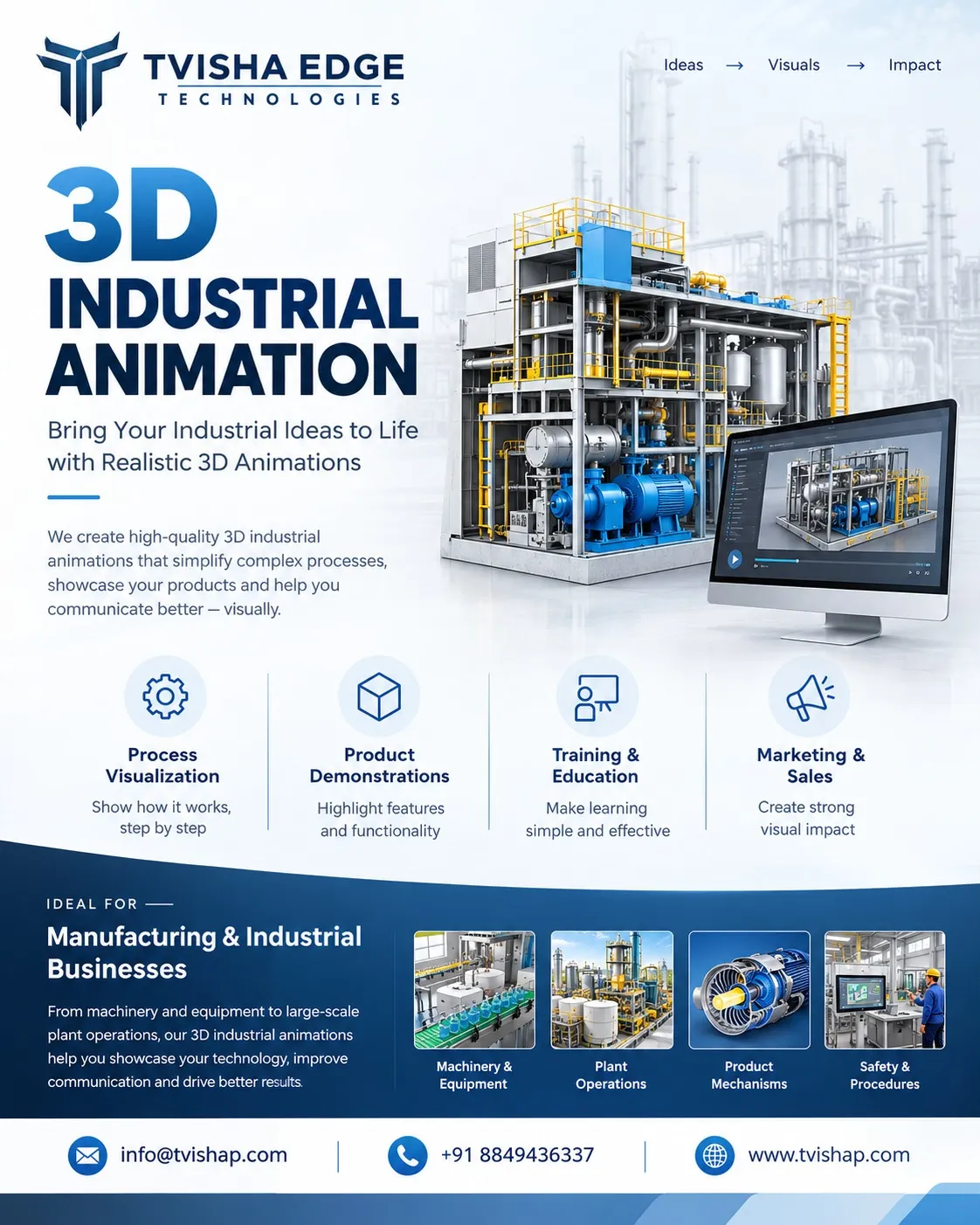
What Is Industrial 3D Animation?
Industrial 3D animation is a computer-generated video that shows how machines, equipment, and industrial processes work. Artists build it from engineering inputs such as CAD files, technical drawings, P&IDs (piping and instrumentation diagrams), and process descriptions. Because it starts from real engineering data, the final animation shows your actual product, not a generic version of it.
Live-action video can't always do this job. Some mechanisms are hidden inside housings. Some processes happen too fast to film or too slowly to watch. Some equipment is too large, too expensive, or too risky to bring to a trade show. A 3D animation can reveal the inside, speed up or slow down a process, and show the same machine from any angle.
How Industrial 3D Animation Is Created
Most projects follow a clear production pipeline:
- Engineering review. The team studies CAD files, drawings, and process flows to understand how the equipment works.
- Modeling. Each component is modeled with attention to dimensions, materials, and assembly.
- Rigging and motion. Moving parts are set up to behave the way the real machine does.
- Scene and lighting. The environment, such as a factory floor or plant layout, is built and lit for realism.
- Client review. You check technical accuracy at each stage, so corrections happen early and cost less.
- Rendering and delivery. The approved animation is rendered in the format and resolution you need.
The review step matters most. Engineers and operators will spot a wrong part or a wrong sequence quickly, so it's worth getting it right early.
Types of Industrial 3D Animation
Different business goals need different formats. These are the most common types.
Machine Operation Animation
This shows a machine from the inside: its operating sequence, moving parts, and output cycle. It's popular in equipment sales, where a buyer wants to see a machine run before committing to it.
Manufacturing Process Animation
This follows a product or material from raw input to finished output. Chemical, pharma, food, and metal manufacturers often use it in investor and client presentations, because it makes a long process easy to follow in a few minutes.
Exploded View Animation
This separates an assembly into its parts and shows how they fit together. It works well for product catalogues, maintenance guides, and technical sales decks.
Installation and Commissioning Animation
This walks through setup step by step. It's useful for OEMs that ship machines overseas, where a clear visual guide can cut down on confusion during installation.
Plant Walkthrough Animation
This gives a tour of a full facility, covering zones, equipment placement, and material flow. It's useful for investor reviews and pre-construction planning, when the plant exists only on paper.
Operation and Maintenance Animation
This teaches inspection, servicing, and fault-handling steps. Maintenance teams can practice a procedure on screen before they touch the real machine.
Safety Training Animation
This demonstrates safe procedures and emergency responses in a repeatable way. It's especially useful in high-risk sectors such as oil and gas, chemicals, and process plants, where practicing on live equipment isn't an option.
Where Industrial 3D Animation Is Used
Industrial 3D animation supports several business areas at once:
- Sales: Sales teams can show features before a physical model is ready.
- Tenders and proposals: Clear visuals help reviewers understand your solution faster.
- Training: New workers and engineers learn faster when they can see the process.
- Marketing: Animations work well on websites, at trade shows, and on social media.
- Documentation: Visual instructions can support or partly replace long manuals.
Industries that use it most include manufacturing, engineering, oil and gas, pharmaceuticals, food processing, renewable energy, and construction.
Benefits of Industrial 3D Animation
- It shows what can't be seen. Internal flows, hidden mechanisms, and sealed processes become visible.
- It simplifies complex technology. A process that takes pages of text can often be explained in a few minutes of video.
- It can reduce training costs. One reusable animation can train new staff without repeated live demonstrations.
- It builds buyer confidence. A precise, professional animation signals that the company knows its product well.
- It helps decisions move faster. Stakeholders can compare options with fewer back-and-forth meetings.
- It can catch design issues early. Problems can show up in the digital model before a physical prototype is built.
Real-World Examples
Imagine a company that makes packaging machines. A machine operation animation can show how containers move through a filling and stoppering line, from loading to collection, so a buyer sees the whole cycle before the machine ships.
Or take a water treatment company. A process animation can show each filtration stage in order, which helps a non-engineer investor understand why the plant is designed the way it is.
A plant designer can also use a walkthrough to present a planned facility before construction starts. Investors can see zones, traffic flow, and equipment placement, and suggest changes while changes are still cheap.
In each case, the animation starts from real engineering data and answers the specific questions the viewer needs answered.
How to Choose an Industrial 3D Animation Partner
Not every 3D studio is built for industrial work. Here's what to look for:
- Experience with engineering data. Ask whether they can work from CAD files and technical drawings, not just concept art.
- A clear review process. Good studios show work at each stage and welcome technical feedback.
- Format advice. They should help you pick the right type of animation for your goal, not just make what you asked for first.
- Realistic timelines. Ask how revisions are handled and what affects the schedule.
Files that help a project start quickly include CAD files (STEP, IGES, SolidWorks, AutoCAD, or Inventor formats are ideal), technical drawings, P&IDs, process descriptions, and equipment manuals. If you don't have everything, don't worry. A good studio can often work with what you have.
Frequently Asked Questions
Q.What is industrial 3D animation?
It's a computer-generated video that shows how machines, equipment, and industrial processes work. It's built from engineering data such as CAD files and technical drawings.
Q.Who uses industrial 3D animation?
Manufacturers, OEMs, engineering firms, oil and gas companies, pharmaceutical producers, and plant developers use it for sales, training, documentation, and marketing.
Q.How is industrial 3D animation different from product animation?
Industrial 3D animation focuses on machinery, processes, and plant operations. Product animation usually focuses on how a product looks and works for marketing. The two often overlap.
Q.What files do I need to start?
CAD files in common formats are ideal. Technical drawings, P&IDs, process descriptions, and equipment manuals also help.
Q.How long does it take to produce?
It depends on complexity, length, and the number of revisions. A short machine animation may take a few weeks, while a full plant walkthrough takes longer.
Q.Can industrial 3D animation be used for training?
Yes. It's effective for teaching operating procedures, maintenance steps, and safety protocols without the risks of on-site practice.
Final Thoughts
Industrial 3D animation turns complex machines and processes into visuals people understand quickly. Whether you need a machine operation video for a sales deck or a plant walkthrough for an investor review, the right animation can make your message clearer and easier to act on.
If you're planning a project, Tvisha Edge Technologies, an Ahmedabad-based 3D industrial animation studio, can help you define the goal, choose the right format, and build an animation that's both accurate and easy to follow. Contact us or call +91 88494 36337 to talk through your requirements.


Comments
Post a Comment